Summary
A practical beginner’s guide to operating a commercial electric vehicle in South Indian cities, covering charging, route planning, maintenance and maximising daily earnings for new EV owners.
Introduction
South India is in the middle of an electric revolution. According to the Society of Indian Automobile Manufacturers (SIAM), electric three-wheeler sales in India grew by over 50% in 2023-24, with South Indian states leading adoption rates driven by strong state level EV policies and rising fuel costs. If you have recently invested in a commercial electric vehicle or are considering one, understanding how to operate it efficiently in South Indian city conditions is the difference between a good investment and a great one. This guide covers everything a first time operator needs to know about running the best commercial electric vehicle in South India profitably and confidently.
Understanding Your Vehicle Before You Hit the Road
Before anything else, every new commercial EV operator must invest time in understanding their vehicle’s core systems. This is not just about safety. It is about maximising the return on your investment from day one.
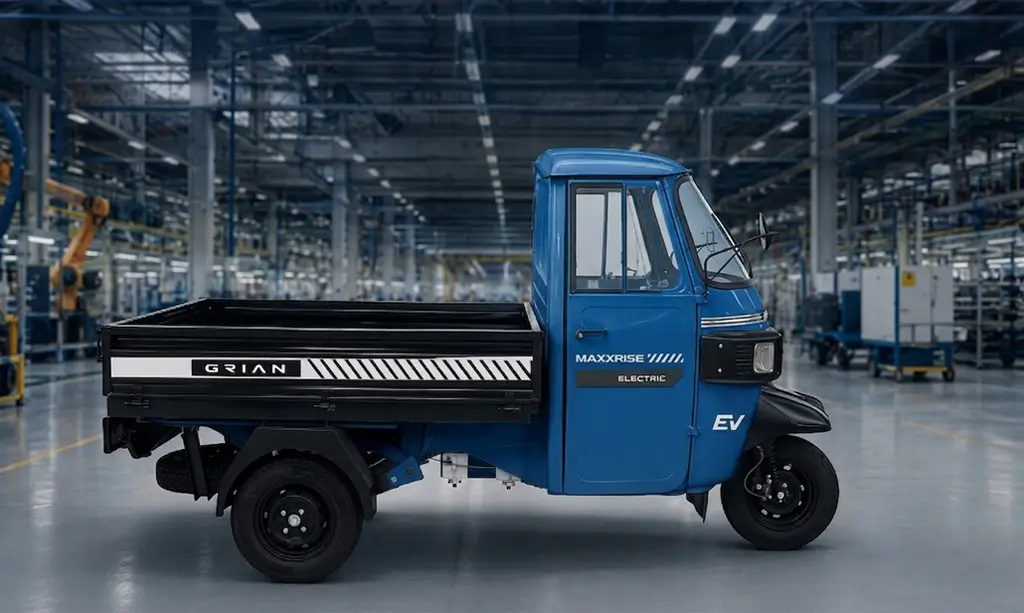
The three systems that matter most are the battery management system, the drivetrain and the braking system. Modern commercial EVs like the MAXXRISE from Grian Motors use a Lithium Ferro Phosphate (LiFePO4) battery with a Battery Management System (BMS) that automatically monitors charge levels, temperature and cell balance. Understanding how your BMS works helps you avoid the two most common mistakes new EV operators make, which are overcharging and deep discharging. Both significantly reduce battery life over time. The MAXXRISE battery is rated for 1200 life cycles, but consistent charging discipline can help you get the maximum life out of every cycle.
The drivetrain on a commercial EV is fundamentally simpler than a diesel or CNG vehicle. With automatic transmission and no clutch or gearbox to manage, new operators typically adapt very quickly. The RNFB driving modes on the MAXXRISE, which stand for Reverse, Neutral, Forward and Boost, give operators full directional control with minimal complexity, making it one of the most beginner friendly small commercial electric vehicles in South India today.
Charging Smart: The Key to Maximum Daily Earnings
For a commercial EV operator, charging strategy is as important as driving strategy. How and when you charge your vehicle directly impacts how many kilometres you can cover in a day and therefore how much your business earns.
The most practical approach for South Indian operators is overnight charging. The MAXXRISE charges fully in 5 to 5.5 hours using a standard AC 230V socket, which means plugging in at the end of your working day ensures a fully charged vehicle ready for the next morning. According to the International Energy Agency’s Global EV Outlook 2023, over 80% of EV charging globally happens at home or at depot locations overnight, confirming that overnight charging is both the most convenient and most cost effective strategy for commercial operators.
For operators covering more than 120 km daily, a mid-day top-up charge during breaks can extend operational range without significant downtime. The best commercial electric vehicles in South India 2026 are designed to support both onboard and offboard charging, giving operators maximum flexibility across different charging scenarios.
Route Planning for South Indian City Conditions
South Indian cities present a unique set of operational challenges that every commercial EV operator must plan for. Chennai’s coastal humidity, Coimbatore’s semi-hilly terrain, Bangalore’s notorious traffic congestion and Kochi’s monsoon flooding are just a few of the variables that affect daily EV performance.
Effective route planning starts with understanding your vehicle’s real world range under local conditions. The MAXXRISE delivers 150 km of real world range, but this figure can vary based on cargo weight, road gradient and traffic density. A study by the Automotive Research Association of India found that stop-and-go urban traffic can reduce EV range by 15 to 20% compared to free flowing highway conditions. Planning routes that balance load distribution, avoid unnecessary gradients and incorporate charging stops where needed will help you consistently achieve the best performance from your vehicle.
Gradeability is a particularly important factor for operators in cities like Coimbatore, Mysuru and Thiruvananthapuram where elevated roads, flyovers and hilly routes are common. The MAXXRISE delivers 23% gradeability, making it one of the most capable heavy duty electric vehicles for business in South India for operators who regularly navigate challenging terrain with full cargo loads.
Daily Maintenance Habits That Protect Your Investment
One of the biggest advantages of operating a commercial EV over a diesel or CNG vehicle is significantly lower maintenance requirements. With no engine oil changes, no fuel filters, no clutch replacements and fewer moving parts overall, the maintenance burden on an electric three-wheeler is considerably lighter.
However, daily maintenance habits still matter. Tyre pressure checks, brake fluid levels, battery terminal cleanliness and software updates from your manufacturer all contribute to long term vehicle health. The Ministry of Road Transport and Highways recommends that commercial EV operators conduct a basic pre-departure inspection every day covering tyres, lights, brakes and battery charge level. This takes less than five minutes and can prevent costly breakdowns on route.
Grian Motors provides comprehensive after sales support through its authorised service network across South India, ensuring every MAXXRISE operator has access to trained technicians familiar with the vehicle’s specific requirements. For new operators especially, building a relationship with your authorised service centre from day one is an investment that pays dividends throughout your ownership experience.
Maximising Daily Earnings with Your Commercial EV
Ultimately, every business decision comes down to profitability. The best EV three-wheeler vehicle for logistics in India is the one that maximises your daily earnings while minimising your operational costs. According to a 2023 report by NITI Aayog, electric three-wheelers in India offer up to 60% lower running costs compared to CNG vehicles, primarily due to cheaper electricity costs and lower maintenance requirements.
For a commercial operator covering 120 km daily, the savings against diesel can be substantial over a full working year. Combining these savings with the zero emission advantage that grants unrestricted access to city zones where diesel vehicles face increasing restrictions, commercial EV operators in South India are positioned to run more efficiently, more profitably and more sustainably than their conventional counterparts.
The MAXXRISE from Grian Motors, backed by 30 years of automotive manufacturing expertise and built specifically for Indian business conditions, gives every operator the tools they need to make the most of these advantages from the very first day of operation.
Your Electric Journey Starts Here
Operating a commercial electric vehicle in South Indian cities is simpler, more rewarding and more profitable than most first time operators expect. With the right vehicle, the right charging habits and the right route strategy, your transition to electric mobility can be seamless and immediately beneficial for your business.
The best commercial electric vehicle in South India is one that works as hard as you do, every single day. Explore the MAXXRISE range from Grian Motors today or book a test drive to experience firsthand what purpose built electric mobility feels like on your road.